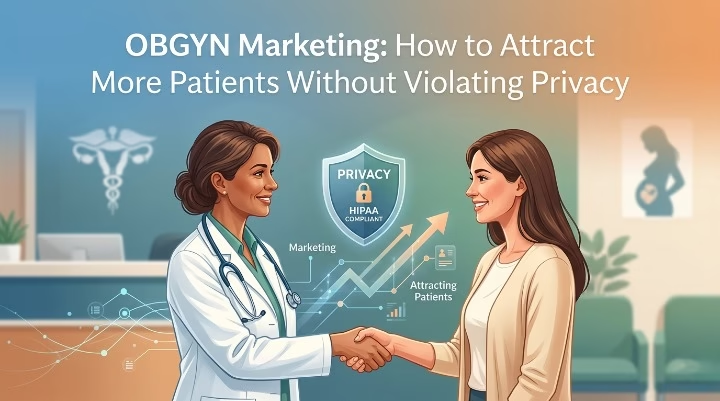
Attracting new patients to an obstetrics and gynecology practice requires a unique approach. Unlike retail or commercial services, healthcare marketing must handle highly sensitive, personal milestones—from fertility journeys and high-risk pregnancies to menopause management.
In today’s digital landscape, executing an aggressive growth strategy while maintaining strict regulatory boundaries is one of the biggest challenges medical practices face. A single misstep with patient data can result in severe federal penalties, devastating legal challenges, and a lasting loss of community trust.
Developing a robust marketing pipeline that respects patient boundaries is entirely achievable. This comprehensive guide outlines how to build an effective OBGYN marketing strategy that protects your practice and keeps patient privacy at the center of your growth.
The Core Conflict: Growth vs. Compliance
The primary challenge in medical marketing is the intersection of modern advertising tools with the Health Insurance Portability and Accountability Act (HIPAA) and strict patient privacy regulations.
Modern digital marketing relies heavily on tracking, personalization, and behavioral data. However, in a medical setting, data that seems routine—such as an IP address, a clicked link about high-risk pregnancy, or a scheduled appointment confirmation—can be classified as Protected Health Information (PHI).
Why Standard Marketing Tools Fail in Healthcare
Many practices rely on standard commercial tools without realizing the risks involved. The Office for Civil Rights (OCR) has established strict parameters regarding online tracking technologies:
- The Third-Party Pixel Risk: Standard tracking tools like the Meta Pixel or standard Google Analytics transmit user behavior from your website directly to external tech companies. If a user views a page on “pelvic organ prolapse” and the pixel links that visit to their personal IP address or social media profile, it creates an unauthorized exposure of PHI. To counter this, practices must build an overall compliant medical marketing strategy that filters data appropriately before it leaves their servers.
- The BAA Requirement: Under federal privacy guidelines, any third-party software that collects, transmits, or handles patient details must sign a Business Associate Agreement (BAA). Standard advertising and analytics platforms explicitly state in their terms of service that they will not sign a BAA, making their standard setups non-compliant on pages where patient intent is revealed.
- The Gray Area of Public Pages: A common point of confusion is the distinction between public-facing and password-protected pages. If an individual interacts with an unauthenticated public page—such as an online booking form or a highly specific symptom checker—and provides an email or phone number alongside a selected medical condition, that interaction can be classified as regulated health data.
4 Compliant Marketing Strategies for OBGYN Practices
Navigating these privacy boundaries doesn’t mean your practice cannot market effectively. By shifting your focus toward educational, value-first strategies, you can build a highly visible brand that naturally attracts patients.
1. Educational Content Marketing & Medical SEO
Content marketing remains one of the safest and most effective ways to grow an OBGYN practice. By publishing authoritative, physician-reviewed articles on your public blog, you educate the community without tracking individual user identities.
When a user searches for answers regarding their health, your practice should be the one providing clear, reliable information. This establishes clinical authority long before a patient ever calls your front desk.
- High-Intent Topics: Build comprehensive guides around specific conditions and treatments, such as “What to Expect During a High-Risk Pregnancy,” “Managing PCOS Symptoms Naturally,” or “Comparing Minimally Invasive Gynecologic Surgery Options.” For the best results, executing an on-page healthcare content marketing strategy ensures these medical pieces address patient questions accurately while ranking on search engines.
- Local Optimization: Most healthcare choices are local. Optimize your articles for geographic searches (e.g., “OBGYN care in [City Name]”) to ensure local patients find your educational resources first.
2. Privacy-First Patient Analytics
To measure your marketing success without risking data exposure, you must move away from standard tracking scripts and transition to privacy-first analytics alternatives.
| Tool Category | Standard Commercial Tools | Compliant Alternatives |
| Website Analytics | Standard Google Analytics (GA4) | Freshpaint, Mixpanel, Improvado |
| Tracking Protocols | Standard Meta / LinkedIn Pixels | Server-side tracking with customer data platforms (CDPs) |
| Data Handling | Transmits user IP + page views directly to ad networks | Strips identifying IP data before sending aggregate counts to ad platforms |
| Legal Protections | Refuses to sign a BAA | Willingly signs a BAA to legally protect the medical practice |
If you are pairing your organic marketing with paid media platforms, running standard tracking directly on your landing pages can leak PHI. To prevent this, read our dedicated guide on setting up privacy-safe campaign architectures for PPC for OBGYN practices to discover how to build high-converting, anonymous ad pipelines.
3. Patient Reviews and Social Proof
Online reviews are highly influential when prospective patients evaluate a new doctor. However, managing reviews for an OBGYN practice requires strict boundary management.
- The Golden Rule of Review Replies: Even if a patient posts a detailed review naming their specific procedure or pregnancy milestone, you cannot confirm they are a patient in your public reply. Doing so publicly validates a medical relationship without formal authorization.
- How to Safely Respond: Keep all public responses strictly generalized and focused on office policies rather than the individual.Compliant Example: “Thank you for the feedback. Our clinical team strives to provide compassionate, comprehensive care to every individual who walks through our doors.”
- Review Generation: If you want to increase your clinical standing online without breaking the law, you can follow verified, risk-free methods on how to get patient reviews to ask your visitors for feedback safely.
4. Cultivating Local Referral Pipelines
Digital strategies are powerful, but traditional medical network growth remains a reliable foundation for patient acquisition.
- Primary Care Partnerships: Establish strong communication channels with local internal medicine providers, family physicians, and pediatricians. Ensure they have clear documentation on your specialized services, such as specialized fertility evaluations or advanced laparoscopic surgeries.
- Community Outreach: Sponsor local women’s health seminars, lactation support circles, or wellness panels. Providing public education face-to-face builds immediate trust and positions your practitioners as accessible community experts.
A Compliance Checklist for Digital Touchpoints
Before launching a new digital initiative, audit your existing channels against this baseline safety checklist:
- [ ] Online Appointment Scheduling: Ensure your digital calendar system encrypts data in transit and at rest, and verify the vendor has executed a signed Business Associate Agreement (BAA).
- [ ] Website Contact Forms: Avoid open-ended message fields where patients might type sensitive medical histories. Limit form fields to basic contact info (Name, Phone, Email) and use a clear warning instructing users not to send urgent medical data over standard forms.
- [ ] Social Media Management: Never publish photos of newborns, expectant parents, or ultrasound imagery on your practice accounts without a fully executed, written HIPAA media authorization form signed by the patient.
- [ ] Email Marketing: Ensure any platform used for newsletter outreach protects recipient lists and encrypts patient data. Never include specific medical diagnoses or sensitive clinical milestones directly in email subject lines.
Balancing Care with Strategic Growth
Building a thriving OBGYN practice does not require compromising patient confidentiality. By prioritizing comprehensive educational content, securing your digital touchpoints, and selecting software vendors that understand healthcare regulations, you can create a marketing framework that respects patient boundaries.
Prioritizing privacy safeguards within your growth strategy protects your practice from modern digital liabilities while demonstrating a deep commitment to the security and comfort of the individuals you serve.