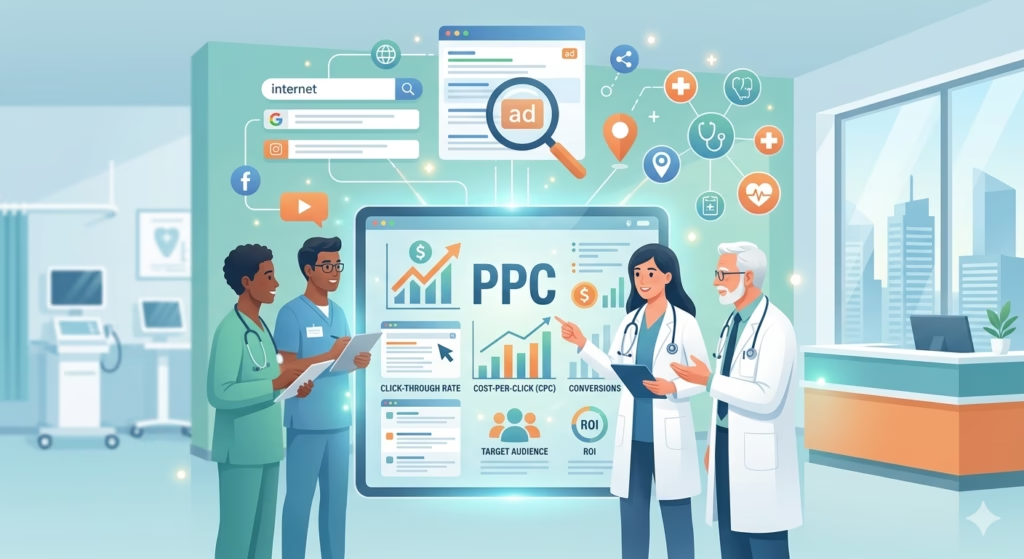
In today’s digital world, healthcare patients no longer rely only on referrals or walk-ins. Most people search online before choosing a doctor, clinic, or medical service. This is where paid advertising on search engines becomes a powerful tool for healthcare growth.
Medical practice PPC marketing helps healthcare providers appear at the top of search results when potential patients are actively looking for services. It is one of the fastest ways to generate qualified leads and increase patient appointments.
This beginner’s guide explains how PPC works in healthcare, its benefits, challenges, and how medical practices can use it effectively.
What is Medical PPC Advertising?
PPC (Pay-Per-Click) advertising is a digital marketing model where advertisers pay a fee each time someone clicks on their ad. In healthcare, these ads typically appear on platforms like Google when users search for services such as “dentist near me,” “skin specialist,” or “emergency clinic.”
Medical practice PPC marketing focuses specifically on promoting healthcare services through paid search campaigns to attract patients who are already searching for treatment.
How PPC Works for Healthcare Practices
PPC campaigns usually follow this process:
- A healthcare provider selects relevant keywords
- Ads are created based on those keywords
- Ads appear in search results when users search related terms
- The practice pays only when someone clicks the ad
- The user lands on a website or booking page
This model is highly effective because it targets people with clear intent.
Why PPC is Important for Medical Practices
Healthcare is a competitive industry, especially in urban areas. PPC allows clinics and hospitals to:
- Appear instantly in search results
- Target specific patient groups
- Control advertising budget
- Track performance in real time
- Increase appointment bookings
Unlike organic SEO, PPC delivers immediate visibility, which is important for new or growing practices.
Benefits of Medical PPC Advertising
Medical practice PPC marketing offers several important advantages, including:
1. Immediate Patient Traffic
PPC ads start bringing visitors as soon as the campaign goes live.
2. Highly Targeted Audience
You can target patients based on location, age, and search intent.
3. Budget Control
You decide how much to spend daily or monthly.
4. Measurable Results
All clicks, impressions, and conversions can be accurately measured and analyzed.
5. Increased Appointments
Well-optimized ads can directly increase patient bookings.
Challenges of Medical PPC Advertising
While PPC is powerful, it also has some limitations:
- High competition for medical keywords
- Rising cost-per-click in healthcare niches
- Requires continuous optimization
- Poorly managed campaigns can waste budget
- Compliance with healthcare advertising rules is necessary
Because of these challenges, proper strategy and monitoring are essential.
Pros and Cons of Medical PPC Marketing
| Pros | Cons |
| Immediate visibility on search engines | Can become expensive in competitive markets |
| Highly targeted patient reach | Requires continuous management |
| Easy to measure performance | Clicks do not always convert into patients |
| Flexible budgeting options | Risk of wasted budget without optimization |
| Increases appointment bookings quickly | Needs compliance with healthcare advertising policies |
Best Practices for Medical PPC Campaigns
To get the best results from medical practice PPC marketing, healthcare providers should follow these strategies:
1. Use Relevant Keywords
Focus on patient intent-based keywords like “near me” searches or specific treatments.
2. Create Strong Landing Pages
Ads should lead to pages that clearly explain services and encourage bookings.
3. Target Local Patients
Most healthcare services are location-based, so geo-targeting is essential.
4. Use Ad Extensions
Include call buttons, location info, and appointment links.
5. Monitor and Optimize
Regularly review campaign performance and adjust bids or keywords.
Who Should Use PPC in Healthcare?
PPC advertising is useful for:
- Dental clinics
- Dermatology practices
- Private hospitals
- Physiotherapy centers
- Urgent care clinics
- Cosmetic surgery clinics
- General physicians
Any healthcare provider looking to increase patient flow can benefit from PPC campaigns.
Conclusion
Medical practice PPC marketing is one of the most effective ways for healthcare providers to attract new patients quickly. It offers instant visibility, precise targeting, and measurable results, making it a valuable part of any digital marketing strategy.
However, success depends on proper planning, keyword selection, and continuous optimization. When managed correctly, PPC can become a powerful growth engine for medical practices, helping them connect with patients at the exact moment they are searching for care.