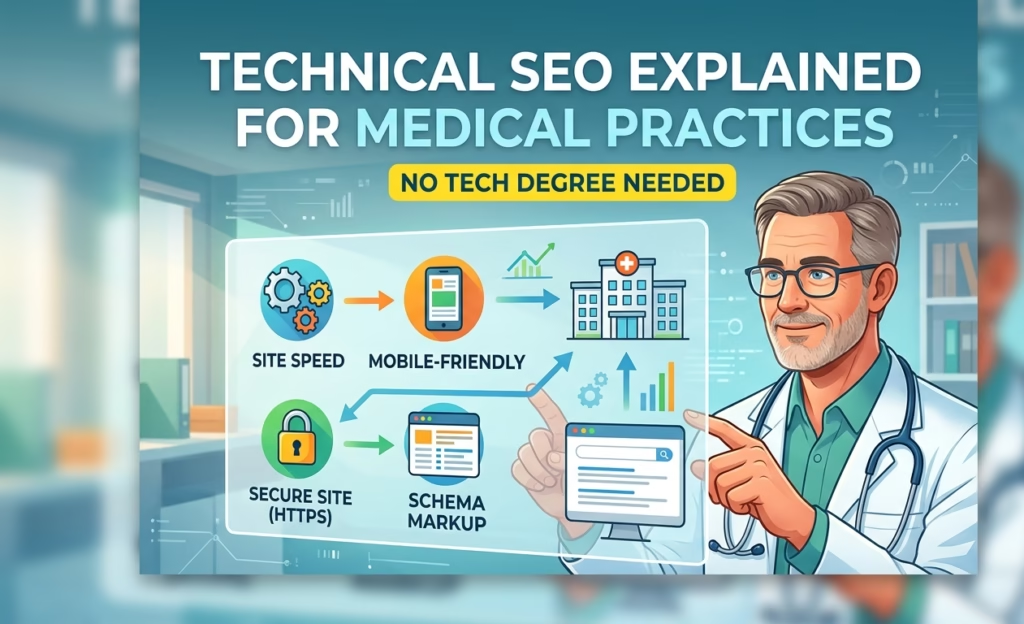
Running a medical practice today requires more than providing excellent patient care. Most patients begin their healthcare journey online, searching for clinics, specialists, and medical services in their area. If your website is difficult for search engines to crawl or loads slowly, potential patients may never find your practice. This is where technical SEO for medical practices becomes essential.
Technical SEO focuses on optimizing the structure and performance of a website so search engines can easily access, understand, and rank its content. The good news is that you do not need a technical background to understand the basics and make improvements that can help your practice grow online.
What Is Technical SEO?
Technical SEO refers to the behind-the-scenes improvements that help search engines navigate and index your website effectively. Unlike content creation or link building, technical SEO deals with factors such as website speed, mobile usability, security, site structure, and indexing.
For medical practices, these optimizations help ensure that patients can quickly find important information such as services, physician profiles, appointment scheduling options, and contact details.
Why Technical SEO Matters for Medical Practices
Patients expect healthcare websites to be fast, secure, and easy to use. Search engines share these expectations and often reward websites that provide a better user experience.
Benefits of technical SEO include:
- Better visibility in search engine results
- Faster website performance
- Improved patient experience
- Increased appointment requests
- Higher trust and credibility
- Better mobile accessibility
When implemented correctly, technical SEO for medical practices can help attract more qualified visitors and convert them into patients.
Key Elements of Technical SEO for Medical Practices
1. Website Speed Optimization
A slow website can frustrate visitors and cause them to leave before viewing your services.
Ways to improve speed include:
- Compressing images
- Reducing unnecessary code
- Using browser caching
- Choosing reliable web hosting
- Minimizing large files
Fast-loading pages create a better experience for patients and support stronger search rankings.
2. Mobile-Friendly Design
Many patients search for healthcare providers using smartphones. If your website is difficult to use on mobile devices, visitors may leave quickly.
A mobile-friendly website should:
- Adjust to different screen sizes
- Display readable text
- Have easy-to-click buttons
- Load quickly on mobile networks
Search engines prioritize mobile usability, making it a critical part of technical SEO.
3. Secure Website (HTTPS)
Healthcare websites often collect sensitive information through contact forms and appointment requests.
Installing an SSL certificate enables HTTPS security, which:
- Protects user data
- Builds patient trust
- Meets modern security standards
- Supports search visibility
Website security reassures visitors that their personal information is protected.
4. Proper Site Structure
A clear website structure helps both patients and search engines find information.
An organized structure may include:
- Home page
- About the practice
- Services pages
- Physician profiles
- Patient resources
- Contact page
Clear navigation improves usability and supports better indexing.
5. XML Sitemap
An XML sitemap acts as a roadmap for search engines. It tells them which pages should be crawled and indexed.
Medical practices should regularly update their sitemap whenever new services, providers, or locations are added.
6. Fixing Broken Links
Broken links create a poor user experience and can negatively affect search performance.
Regular website audits can help identify:
- Missing pages
- Incorrect URLs
- Outdated links
Keeping links functional improves website quality and user satisfaction.
7. Structured Data for Healthcare Websites
Structured data helps search engines understand information about your practice.
This may include:
- Business name
- Address
- Phone number
- Office hours
- Medical specialties
- Physician information
Structured data can improve how your practice appears in search results and increase visibility.
Pros and Cons of Technical SEO for Medical Practices
| Pros | Cons |
| Improves search engine visibility | May require ongoing maintenance |
| Enhances website speed and performance | Some fixes may need professional assistance |
| Creates a better patient experience | Results are not always immediate |
| Supports mobile users effectively | Larger websites may require more extensive audits |
| Builds trust through improved security | Initial optimization can take time |
| Helps search engines understand content | Requires periodic monitoring and updates |
Common Technical SEO Mistakes Medical Practices Make
Many healthcare websites struggle because of avoidable technical issues.
Common mistakes include:
- Slow page loading times
- Duplicate content
- Missing meta information
- Poor mobile responsiveness
- Broken internal links
- Missing HTTPS security
- Incorrect redirects
- Unoptimized images
Addressing these problems can significantly improve website performance.
Simple Technical SEO Checklist
Medical practices can start with these simple steps:
✓ Test website speed regularly
✓ Ensure mobile responsiveness
✓ Install SSL security
✓ Submit an XML sitemap
✓ Fix broken links
✓ Optimize image sizes
✓ Improve navigation structure
✓ Use healthcare-related structured data
✓ Monitor indexing issues
✓ Conduct regular technical audits
Following this checklist can strengthen your website’s foundation and support long-term growth.
Conclusion
Technical SEO may sound complicated, but its purpose is simple: helping search engines and patients access your website more efficiently. By focusing on speed, mobile usability, security, structured data, and site organization, medical practices can improve online visibility and create a better experience for visitors.
Investing in technical SEO for medical practices is not just about improving rankings. It is about making it easier for potential patients to find trusted healthcare services when they need them most. A well-optimized website can become a valuable tool for attracting new patients, building credibility, and supporting the continued growth of your medical practice.
FAQs
What is technical SEO for medical practices?
Technical SEO for medical practices involves optimizing website performance, security, structure, and indexing to improve search visibility and patient experience.
Why should healthcare organizations invest in technical SEO?
It helps search engines understand your website while making it faster, safer, and easier for patients to use.
How often should a medical website be audited?
A technical SEO audit should typically be performed every few months to identify and fix performance or indexing issues.
Does website speed affect search rankings?
Yes. Faster websites generally provide a better user experience and can contribute to improved search visibility.
Can small medical practices benefit from technical SEO?
Absolutely. Even small clinics can improve patient acquisition and online visibility through effective technical SEO strategies.