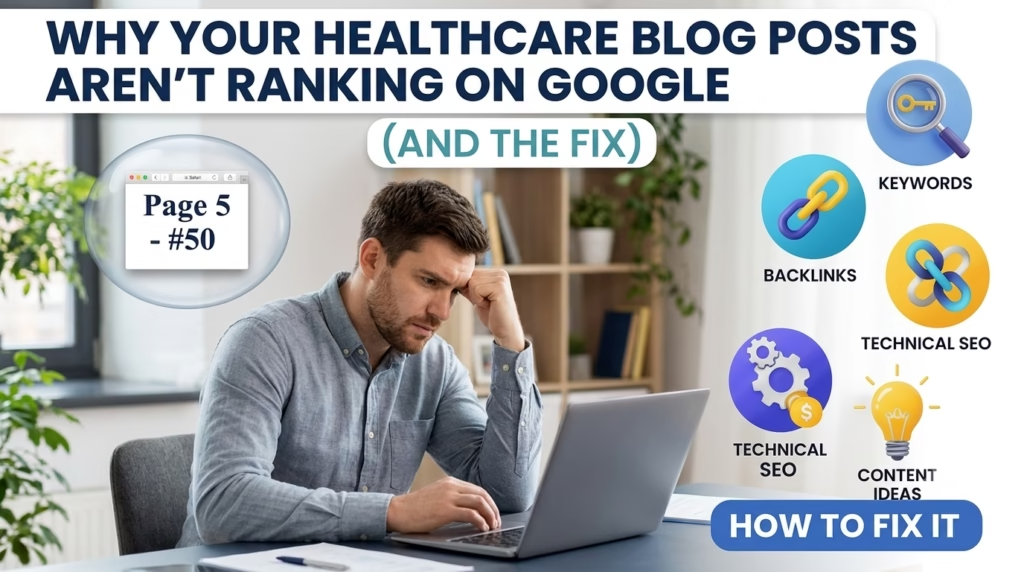
If you’re investing time and effort into publishing healthcare content but still not seeing results on Google, you’re not alone. Many healthcare websites produce valuable articles yet struggle to gain visibility in search results. The good news is that most ranking issues can be identified and fixed with the right healthcare SEO strategy.
This guide compares common mistakes with proven solutions so you can understand exactly why your healthcare blog posts aren’t ranking and what steps you can take to improve performance.
Why Healthcare Blogs Often Fail to Rank
Healthcare is one of the most competitive industries online. Search engines prioritize trustworthy, accurate, and user-focused content.Publishing blog posts regularly does not guarantee visibility in search results.
Let’s compare the most common problems with effective solutions.
| Common Problem | Effective Fix |
| Targeting broad keywords | Focus on specific healthcare SEO keywords |
| Thin content | Create comprehensive and detailed articles |
| Poor website speed | Optimize images and improve loading times |
| Lack of authority | Add expert insights and credible sources |
| Weak internal linking | Connect related articles strategically |
| Ignoring user intent | Match content to searcher needs |
Mistake #1: Targeting the Wrong Keywords
Many healthcare websites target highly competitive keywords that are difficult to rank for.
Poor Approach
Targeting keywords like:
- Healthcare
- Medical services
- Health tips
These terms are extremely competitive and dominated by large websites.
Better Approach
Use long-tail keywords such as:
- healthcare SEO strategies
- local healthcare SEO
- healthcare content marketing
- healthcare website optimization
- healthcare blog SEO tips
Long-tail keywords usually have lower competition and attract visitors who are looking for specific information.
Mistake #2: Publishing Thin Content
Google rewards content that fully answers a user’s question.
Weak Content
- 300–500 words
- Limited information
- No examples
- No supporting data
Strong Content
- 1,000+ words
- Detailed explanations
- Helpful examples
- Actionable advice
- Organized headings
When readers spend more time on your page, search engines view the content as more valuable.
Mistake #3: Ignoring Search Intent
One of the biggest healthcare SEO mistakes is writing content that doesn’t match what users actually want.
Example
A user searches:
“Healthcare SEO tips”
They expect:
- Optimization strategies
- Ranking advice
- SEO best practices
They do not expect:
- General healthcare information
- Medical treatments
- Industry news
Understanding search intent helps create content that satisfies readers and search engines simultaneously.
Mistake #4: Poor Website Performance
Even the best article may struggle to rank if your website loads slowly.
Common Performance Issues
- Large image files
- Too many plugins
- Slow hosting
- Unoptimized code
SEO Benefits of Faster Websites
| Poorly Optimized Website | Well-Optimized Website |
| Higher bounce rates | Better engagement |
| Poor user experience | Positive user experience |
| Lower rankings | Improved rankings |
| Fewer conversions | More conversions |
Healthcare websites should prioritize speed because users often seek quick answers.
Mistake #5: Lack of Content Authority
Healthcare falls under Google’s high-trust content category. Accuracy matters more than ever.
Weak Authority Signals
- No author information
- Unsupported claims
- Outdated content
Strong Authority Signals
- Expert contributors
- Accurate statistics
- Reliable references
- Updated information
Building authority increases trust and improves long-term ranking potential.
Mistake #6: Weak Internal Linking
Many healthcare blogs publish articles without connecting them.
Poor Internal Linking
Article A stands alone.
Article B stands alone.
Article C stands alone.
Effective Internal Linking
Article A links to B.
Article B links to C.
Article C links back to A.
This structure helps search engines understand your website and keeps visitors engaged longer.
Mistake #7: Not Optimizing On-Page SEO
Basic optimization mistakes can prevent good content from reaching its full ranking potential.
Essential On-Page Elements
- Keyword in title
- Keyword in first paragraph
- Keyword in headings
- Optimized meta description
- Descriptive URLs
- Image alt text
Using the keyword “healthcare SEO” naturally throughout the article helps search engines understand the topic without keyword stuffing.
Pros and Cons of Healthcare SEO
| Pros | Cons |
| Increases organic traffic | Results take time |
| Builds brand authority | High competition |
| Generates quality leads | Requires ongoing updates |
| Improves online visibility | Content creation can be demanding |
| Provides long-term value | SEO algorithms change regularly |
Quick Healthcare SEO Checklist
Before publishing your next healthcare blog post, make sure you:
✓ Research targeted keywords
✓ Write comprehensive content
✓ Match search intent
✓ Improve page speed
✓ Add internal links
✓ Optimize headings
✓ Include expert-backed information
✓ Update older content regularly
Following this checklist can significantly improve your chances of ranking higher on Google.
Conclusion
Most healthcare blogs fail to rank not because the content is bad, but because key SEO fundamentals are missing. Successful healthcare SEO requires targeted keywords, high-quality content, strong authority signals, fast website performance, and a strategy that aligns with user intent.
Instead of publishing more content, focus on publishing better-optimized content. By fixing common SEO mistakes and implementing proven optimization techniques, healthcare websites can improve visibility, attract qualified visitors, and achieve sustainable growth in search rankings.