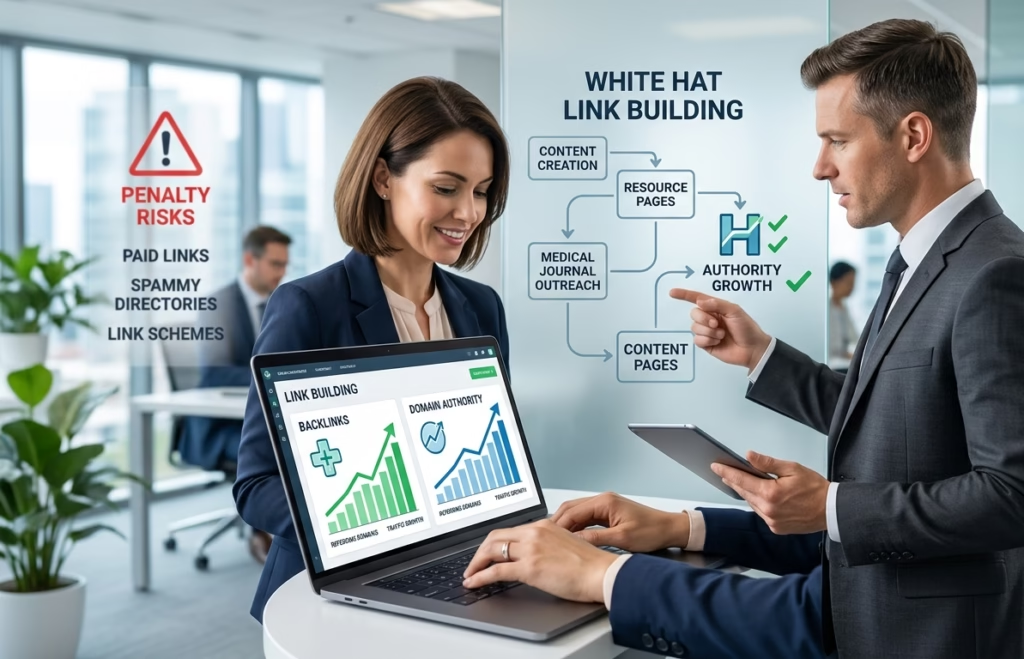
In the competitive healthcare industry, building trust online is just as important as providing quality services. One of the most effective ways to improve search engine visibility and establish authority is through link building for healthcare websites. High-quality backlinks signal credibility to search engines and can help healthcare organizations rank higher in search results.
However, not all link-building strategies are beneficial. Some tactics can lead to search engine penalties, reduced rankings, and damage to a website’s reputation. Understanding the difference between effective and risky practices is essential for long-term success.
Why Link Building Matters for Healthcare Websites
Healthcare websites operate in a highly sensitive niche where trust and accuracy are critical. Search engines evaluate these websites carefully because they provide information that can affect people’s health and well-being.
Quality backlinks from trusted sources can:
- Improve search engine rankings
- Increase website authority
- Drive targeted traffic
- Strengthen brand credibility
- Enhance online visibility
For healthcare providers, clinics, hospitals, and medical bloggers, a strong backlink profile can make a significant difference in attracting patients and readers.
What Works in Link Building for Healthcare Websites
1. Create High-Quality Educational Content
The foundation of successful link building is valuable content. Healthcare websites that publish informative articles, research findings, guides, and patient resources are more likely to earn natural backlinks.
Examples include:
- Disease prevention guides
- Medical research summaries
- Health awareness articles
- Treatment comparison guides
- Wellness tips
Content that effectively addresses readers’ needs tends to attract organic backlinks from related websites.
2. Guest Posting on Relevant Websites
Writing articles for reputable healthcare, wellness, and medical industry websites remains an effective strategy.
Benefits include:
- Exposure to new audiences
- Improved authority
- Quality backlinks
- Increased brand awareness
Focus on websites that are relevant to healthcare and maintain strong editorial standards.
3. Build Relationships with Industry Experts
Networking with healthcare professionals, medical associations, and industry publications can open opportunities for natural backlinks.
Consider:
- Participating in interviews
- Contributing expert opinions
- Collaborating on research
- Sharing healthcare insights
These relationships often lead to mentions and links from authoritative sources.
4. Get Listed in Trusted Directories
Submitting your practice to trusted healthcare directories can boost search visibility and attract more potential patients.
Examples include:
- Medical directories
- Professional association websites
- Local healthcare listings
- Hospital directories
Choose reputable directories that are relevant to your specialty and location.
5. Publish Original Research and Statistics
Unique data attracts links from journalists, bloggers, and industry publications.
Research-based content can include:
- Patient surveys
- Healthcare trends
- Clinical studies
- Industry reports
Original statistics often become valuable references for other content creators.
6. Local Link Building
Local SEO is essential for healthcare providers serving specific communities.
Effective local link opportunities include:
- Local business organizations
- Community events
- Health awareness campaigns
- Local news websites
These links help improve local search visibility and strengthen community presence.
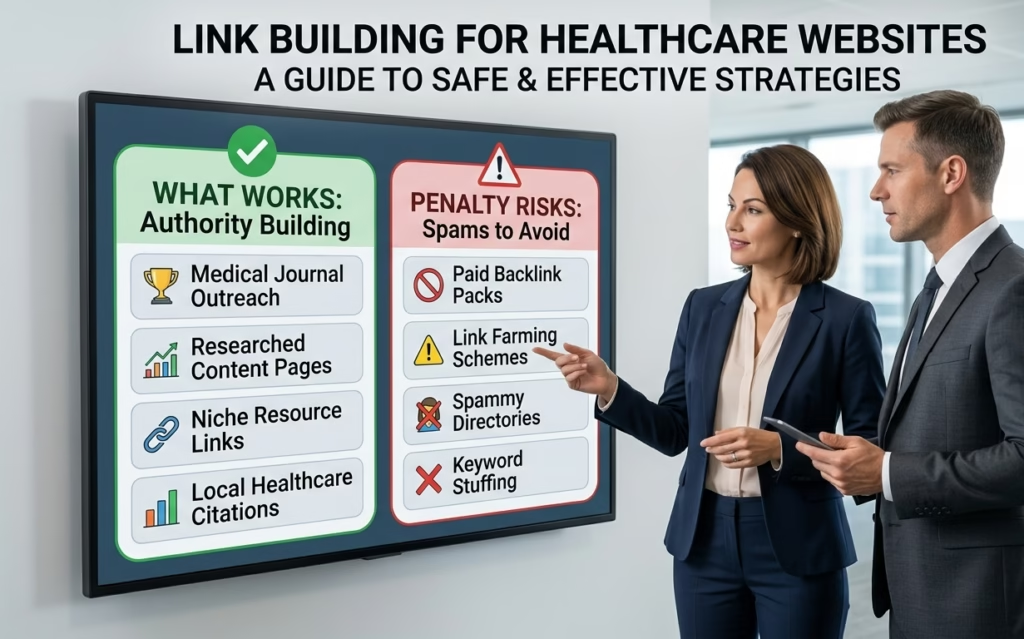
Link Building Techniques That Could Damage Your SEO
1. Buying Links
Purchasing backlinks may seem like a quick way to improve rankings, but it violates search engine guidelines.
Risks include:
- Ranking drops
- Manual penalties
- Loss of trust
- Long-term SEO damage
Quality links should be earned rather than purchased.
2. Using Private Blog Networks (PBNs)
PBNs consist of multiple websites that are used to build backlinks and influence search engine rankings.
While they may produce temporary gains, search engines have become highly effective at identifying these schemes.
Potential consequences include:
- De-indexing of websites
- Significant ranking losses
- Penalty actions
3. Excessive Link Exchanges
A few natural partnerships are acceptable, but excessive reciprocal linking can appear manipulative.
Avoid:
- Large-scale link swaps
- Irrelevant link partnerships
- Automated exchange schemes
The primary purpose of a backlink should always be to provide value to users.
4. Spammy Directory Submissions
Not all directories are trustworthy.
Warning signs include:
- Low-quality websites
- No editorial review
- Irrelevant categories
- Excessive advertising
Submitting a healthcare website to poor-quality directories can weaken backlink quality.
5. Keyword-Stuffed Anchor Text
Using the exact same keyword repeatedly in anchor text can trigger search engine concerns.
Instead of repeatedly using:
“link building for healthcare websites”
Use natural variations such as:
- healthcare SEO strategies
- medical website marketing
- healthcare digital marketing
A diverse anchor text profile appears more natural and trustworthy.
6. Automated Link Building
Software that generates backlinks automatically often creates low-quality links on irrelevant websites.
Common problems include:
- Spam comments
- Forum spam
- Low-quality backlinks
- Poor user experience
These tactics rarely produce sustainable results.
Pros and Cons of Link Building for Healthcare Websites
| Pros | Cons |
| Improves search engine rankings | Requires ongoing effort |
| Increases website authority | Results may take time |
| Generates targeted traffic | Poor tactics can lead to penalties |
| Builds brand trust and credibility | Quality outreach can be resource-intensive |
| Supports local SEO performance | Competitive healthcare niche |
| Creates long-term marketing value | Requires consistent content creation |
Best Practices for Safe Link Building
To maintain a healthy backlink profile:
- Prioritize quality over quantity.
- Focus on healthcare-related websites.
- Publish accurate and trustworthy content.
- Monitor backlinks regularly.
- Avoid shortcuts and manipulative tactics.
- Build relationships within the healthcare industry.
- Earn links naturally through valuable resources.
A small number of high-authority backlinks is often more beneficial than hundreds of low-quality links.
Conclusion
Successful link building for healthcare websites requires a focus on quality, relevance, and trust. Healthcare organizations that create valuable content, build industry relationships, publish original research, and earn links naturally can strengthen their online presence and improve search visibility over time.
At the same time, risky practices such as buying links, using private blog networks, excessive link exchanges, and automated backlink schemes should be avoided. These tactics may deliver short-term gains but can result in serious penalties that harm long-term growth.