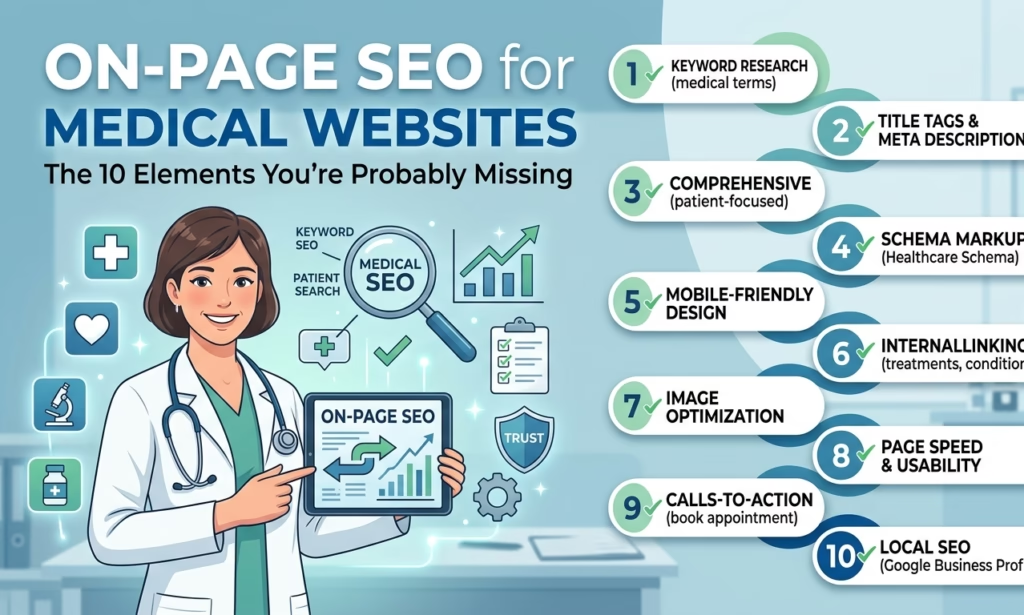
Healthcare websites face unique challenges when it comes to search engine optimization. Patients rely on search engines to find doctors, clinics, hospitals, and trusted medical information. If your website is not properly optimized, you may lose valuable traffic and potential patients to competitors.
A strong medical SEO checklist helps ensure that your website meets search engine requirements while providing a positive experience for visitors. Many medical websites focus on content creation but overlook critical on-page SEO elements that directly impact rankings and visibility.
Below are 10 important on-page SEO elements that many healthcare websites often miss.
1. Optimized Title Tags
The title tag is one of the most important ranking factors. It tells search engines and users what a page is about.
For example:
Family Doctor in Baltimore | Comprehensive Healthcare Services
Keep title tags clear, descriptive, and under 60 characters whenever possible. Include your target keyword naturally without stuffing.
2. Well-Written Meta Descriptions
Although meta descriptions are not a direct ranking factor, they significantly influence click-through rates.
A strong meta description should:
- Be under 160 characters
- Include the primary keyword
- Explain the page’s value
- Encourage users to click
Higher click-through rates often lead to improved visibility over time.
3. Proper Header Structure
Many medical websites use headings incorrectly or skip them entirely.
Use:
- H1 for the main topic
- H2 for major sections
- H3 for supporting details
A clear structure improves readability and helps search engines understand page content more effectively.
4. Keyword Placement That Feels Natural
One of the most important items on any medical SEO checklist is proper keyword placement.
Include your focus keyword in:
- Title tag
- Meta description
- First paragraph
- At least one H2 heading
- Conclusion
Avoid excessive repetition. Search engines prioritize relevance and user experience rather than keyword density alone.
5. Mobile-Friendly Design
Mobile devices have become the primary tool for finding healthcare providers and medical resources.
Patients often search for:
- Nearby doctors
- Urgent care centers
- Medical specialists
- Health information
If your website is difficult to navigate on a smartphone, users may leave quickly, increasing bounce rates and reducing conversions.
Ensure that all pages display correctly across different screen sizes.
6. Fast Page Loading Speed
Website speed directly affects both rankings and user satisfaction.
Common speed issues include:
- Large image files
- Excessive scripts
- Unoptimized code
- Poor hosting services
Patients expect pages to load quickly. A delay of even a few seconds can result in lost visitors.
Compress images, enable caching, and remove unnecessary elements to improve loading performance.
7. High-Quality Medical Content
Healthcare content must be accurate, informative, and trustworthy.
Focus on answering patient questions such as:
- Symptoms
- Treatments
- Prevention methods
- Recovery expectations
Detailed and reliable content helps build credibility while improving organic search performance.
Content should always prioritize patient education and clarity.
8. Internal Linking Strategy
Internal links help visitors navigate your website and allow search engines to discover related pages.
Examples include linking:
- Service pages to physician profiles
- Blog posts to treatment pages
- FAQs to relevant services
A good internal linking structure improves user engagement and distributes authority throughout the website.
9. Image Optimization
Medical websites often contain images of facilities, staff, treatments, and equipment.
Every image should include:
- Descriptive file names
- Relevant alt text
- Optimized file size
For example:
cardiology-consultation.jpg
instead of
IMG12345.jpg
Image optimization improves accessibility and supports SEO efforts.
10. Local SEO Signals
Most healthcare providers serve specific geographic areas.
Include location information throughout your website, such as:
- City name
- State
- Service areas
- Contact information
Also ensure that:
- Business information is consistent
- Google Business Profile details are accurate
- Contact pages are fully optimized
Local optimization helps medical practices appear in local search results and map listings.
Medical SEO Checklist Summary
Before publishing any page, verify that your website includes:
✔ Optimized title tags
✔ Effective meta descriptions
✔ Proper heading structure
✔ Strategic keyword placement
✔ Mobile-friendly design
✔ Fast loading speed
✔ Quality medical content
✔ Internal linking
✔ Optimized images
✔ Strong local SEO signals
Following this medical SEO checklist can significantly improve search visibility and user experience.
Pros and Cons of On-Page SEO for Medical Websites
| Pros | Cons |
| Improves search engine rankings | Requires ongoing maintenance |
| Increases patient inquiries | Results may take time |
| Enhances user experience | Competitive healthcare market |
| Builds trust and credibility | Technical optimization may require expertise |
| Supports local search visibility | Regular content updates are necessary |
| Helps attract qualified traffic | SEO guidelines frequently change |
Conclusion
Many healthcare organizations invest heavily in website design and content creation but overlook essential optimization factors. By focusing on the elements outlined in this guide, medical websites can improve visibility, attract more qualified visitors, and provide a better experience for patients.
A comprehensive medical SEO checklist serves as a roadmap for identifying weaknesses and strengthening overall website performance. From title tags and content optimization to mobile usability and local SEO, each element plays a vital role in helping medical websites compete effectively in search results. Consistently reviewing and updating these areas can lead to stronger rankings, increased traffic, and greater patient engagement over time.