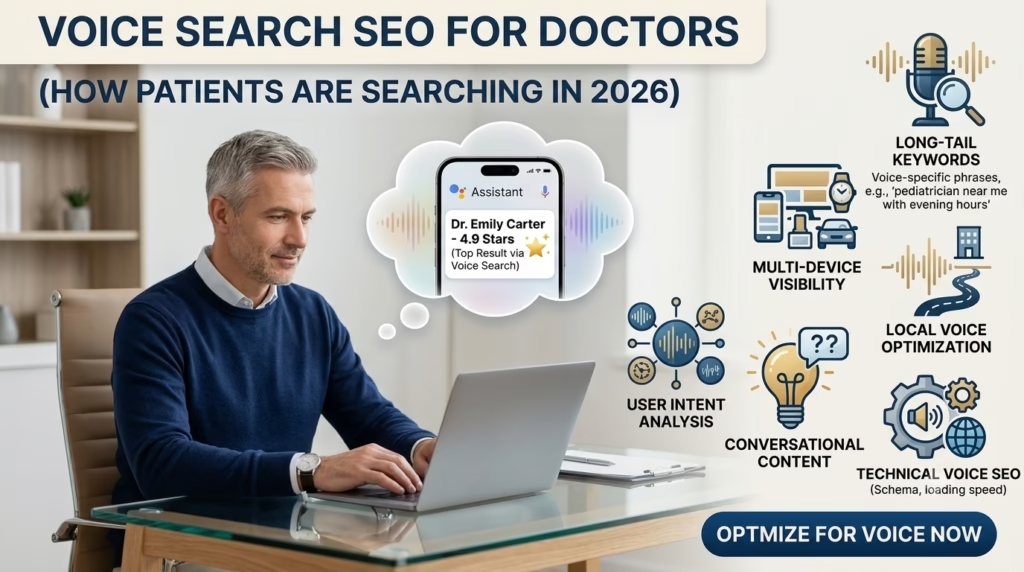
The healthcare industry is evolving rapidly, and patient search behavior is changing with it. Smartphones, smart speakers, and virtual assistants have made voice search a part of daily life. Instead of typing short keywords, patients now ask complete questions when looking for healthcare services.
Understanding voice search trends in healthcare 2026 is becoming essential for doctors, clinics, and healthcare organizations that want to attract more patients online. Practices that optimize for voice search can improve visibility, increase website traffic, and create a better patient experience.
In this guide, we will compare traditional search and voice search while exploring practical strategies doctors can use to stay ahead.
What Is Voice Search SEO?
Voice Search SEO refers to optimizing website content so it appears in search results generated through spoken queries. Patients use voice assistants like Siri, Google Assistant, and Alexa to find healthcare information quickly.
Examples include:
- “Where can I find a family doctor near me?”
- “What are the symptoms of seasonal allergies?”
- “Which pediatric clinic is open today?”
These searches are longer and more conversational than traditional typed searches.
Traditional Search vs Voice Search
The biggest difference between traditional and voice search is how users interact with search engines.
| Traditional Search | Voice Search |
| Uses short keywords | Uses complete questions |
| Example: “dentist near me” | Example: “Who is the best dentist near me accepting new patients?” |
| Mostly typed | Spoken naturally |
| Focuses on keyword matching | Focuses on user intent |
| Often displays multiple results | Often provides a single answer |
Because of this shift, healthcare websites need content that answers patient questions directly.
Why Voice Search Matters for Doctors in 2026
Healthcare is one of the most common industries people search using voice technology. Patients often need quick answers about symptoms, treatments, appointment availability, and nearby clinics.
Several factors are driving this trend:
Increased Mobile Usage
Most healthcare searches now begin on mobile devices. Voice search offers a faster way for patients to find information without typing.
Growing Smart Speaker Adoption
Many households use smart speakers daily. Patients frequently ask health-related questions while at home.
Convenience for Older Adults
Voice search is particularly useful for elderly patients who may find typing difficult.
Faster Access to Healthcare Information
Patients can receive immediate answers, making voice search a preferred method for finding healthcare providers.
Key Voice Search Trends in Healthcare 2026
1. Conversational Queries Are Growing
Patients no longer search using isolated keywords. Instead, they ask complete questions.
For example:
Instead of:
- “heart specialist”
They ask:
- “Who is the best heart specialist near me for chest pain?”
Doctors should create content that mirrors these natural conversations.
2. Local Searches Continue to Dominate
Many voice searches have local intent.
Examples include:
- “Urgent care clinic near me”
- “Doctor open on weekends near me”
- “Best dermatologist in my area”
Healthcare providers should optimize local listings and location pages to capture these searches.
3. Featured Snippets Are More Important
Voice assistants often read information directly from featured snippets.
To increase visibility:
- Answer questions clearly.
- Use concise paragraphs.
- Include FAQ sections.
4. Question-Based Content Performs Better
Patients frequently ask:
- What causes migraines?
- How do I treat seasonal allergies?
- When should I see a doctor for back pain?
Creating content around these questions improves voice search opportunities.
How Doctors Can Optimize for Voice Search
Focus on Natural Language
Write content the way people speak.
Instead of stuffing pages with keywords, answer questions naturally and clearly.
Create FAQ Pages
FAQ pages are highly effective for voice search optimization.
Examples:
Q: How often should adults get a health checkup?
A: Most adults should schedule a routine health checkup once a year, though individual needs may vary.
These formats align perfectly with voice search behavior.
Improve Local SEO
Ensure the following information is accurate:
- Practice name
- Address
- Phone number
- Business hours
Consistency across all platforms improves local search visibility.
Optimize for Mobile Users
Voice searches are primarily performed on mobile devices.
Important factors include:
- Fast page speed
- Mobile-friendly design
- Easy navigation
- Secure website connection
Use Structured Data
Schema markup helps search engines understand healthcare content more effectively.
This can improve eligibility for rich results and voice search responses.
Comparison: Clinics Using Voice SEO vs Clinics Ignoring It
| Clinics Using Voice SEO | Clinics Ignoring Voice SEO |
| Better local visibility | Lower search visibility |
| More qualified traffic | Missed patient opportunities |
| Improved user experience | Higher bounce rates |
| Greater mobile engagement | Reduced mobile performance |
| Increased appointment requests | Slower patient growth |
This comparison highlights why voice optimization is becoming an important marketing strategy for healthcare providers.
Pros and Cons of Voice Search SEO for Doctors
| Pros | Cons |
| Increases online visibility | Requires ongoing content updates |
| Improves local search rankings | Competition continues to grow |
| Enhances patient experience | Results can vary by device |
| Supports mobile users | Technical optimization may be needed |
| Helps capture high-intent searches | Takes time to build authority |
Best Practices for Healthcare Websites in 2026
To stay competitive, doctors should:
- Publish patient-focused content.
- Answer common health questions.
- Optimize for local searches.
- Improve website speed.
- Maintain accurate business information.
- Create FAQ sections.
- Use structured data markup.
- Focus on conversational keywords.
These practices align closely with emerging voice search trends in healthcare 2026 and help attract patients who increasingly rely on voice-enabled devices.
Conclusion
Voice search is changing how patients find healthcare providers and medical information. As more people use smartphones, virtual assistants, and smart speakers, healthcare websites must adapt to evolving search behavior.
The most successful practices in 2026 will be those that understand patient intent, create conversational content, and optimize for local voice searches. By following modern Voice Search SEO strategies, doctors can improve visibility, connect with more patients, and strengthen their online presence in an increasingly competitive healthcare landscape.