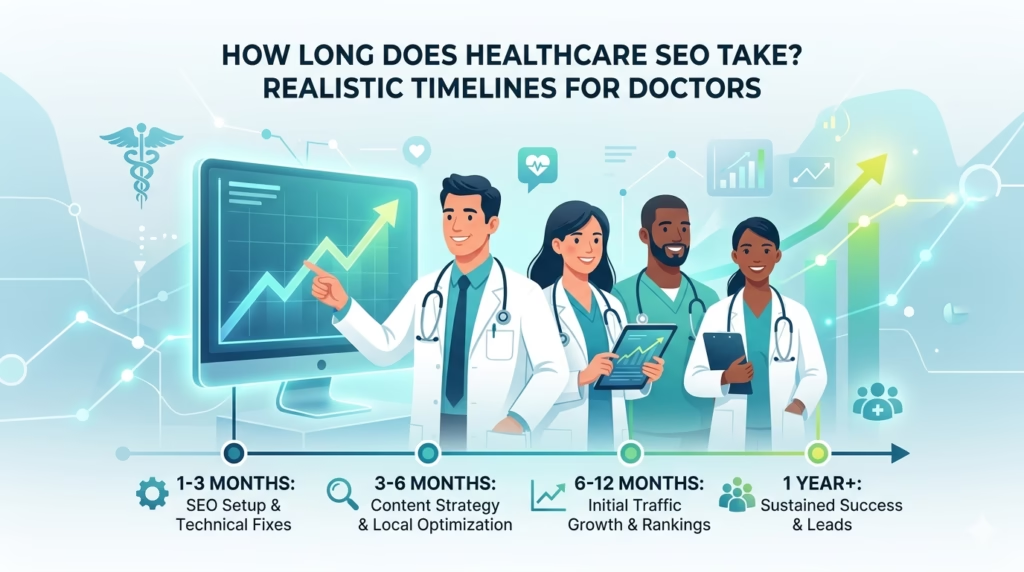
For many medical professionals, investing in SEO is one of the most effective ways to attract new patients online. However, one of the most common questions doctors ask is: How long does healthcare SEO take to deliver results?
The answer depends on several factors, including competition, website quality, content strategy, and local market conditions. While some improvements can be noticed within a few weeks, meaningful and sustainable growth often requires several months of consistent effort.
Understanding realistic timelines helps doctors set proper expectations and build a long-term strategy that generates steady patient inquiries and appointment bookings.
Why SEO Takes Time in Healthcare
Healthcare is considered one of the most competitive industries online. Search engines place high importance on trust, expertise, and credibility when ranking medical websites.
Because patients rely on accurate medical information, search engines carefully evaluate healthcare websites before rewarding them with higher rankings. This means medical practices need quality content, strong website performance, local optimization, and authoritative backlinks to compete successfully.
As a result, healthcare SEO for doctors is typically a long-term marketing investment rather than a quick solution.
Typical Healthcare SEO Timeline
Month 1: Website Audit and Optimization
The first month is usually focused on laying the foundation.
Common tasks include:
- Technical SEO audit
- Website speed improvements
- Mobile optimization
- Keyword research
- Competitor analysis
- Google Business Profile optimization
At this stage, doctors may not see significant traffic increases, but these improvements create the foundation for future growth.
Months 2–3: Content Development
Once the website is optimized, the focus shifts to content creation.
This may include:
- Service pages
- Location-specific pages
- Blog articles
- FAQ content
- Patient education resources
During this phase, search engines begin indexing new content and understanding the site’s relevance to healthcare-related searches.
Some practices may start seeing modest ranking improvements and increased website visibility.
Months 4–6: Ranking Improvements
For many healthcare websites, noticeable progress starts appearing between months four and six.
Possible results include:
- Higher keyword rankings
- Increased local visibility
- More website traffic
- Growth in phone calls and appointment requests
The exact results depend on the competitiveness of the medical specialty and geographic location.
For example, a family physician in a smaller city may see results faster than a cosmetic surgeon competing in a major metropolitan area.
Months 6–12: Consistent Growth
By this stage, SEO efforts typically begin generating substantial returns.
Benefits often include:
- Strong local search visibility
- Increased patient inquiries
- Better brand recognition
- Improved website authority
- More top-ranking keywords
Practices that invest in ongoing content development and website optimization typically enjoy stronger and more consistent growth.
Factors That Affect SEO Timelines
Competition Level
Highly competitive specialties require more time and effort.
Examples include:
- Plastic surgery
- Dermatology
- Orthopedics
- Cosmetic dentistry
Less competitive niches often achieve faster ranking improvements.
Website Age and Authority
Established websites generally perform better than brand-new domains because they already possess trust signals and historical authority.
New websites typically need more time to gain credibility.
Content Quality
Search engines prioritize useful, informative, and patient-focused content.
Medical websites publishing detailed educational resources often outperform competitors relying solely on service pages.
Local SEO Optimization
Local visibility is critical for healthcare providers.
Optimizing:
- Google Business Profile
- Local citations
- Reviews
- Location pages
can significantly accelerate results in local search rankings.
Technical Website Performance
A slow or poorly designed website can delay progress.
Search engines favor websites that provide:
- Fast loading times
- Mobile responsiveness
- Secure browsing
- Easy navigation
Pros and Cons of Healthcare SEO
| Pros | Cons |
| Generates long-term patient leads | Requires time to see results |
| Builds trust and credibility | Competitive healthcare market |
| Reduces dependence on paid advertising | Ongoing optimization is needed |
| Improves local visibility | Content creation requires effort |
| Increases website traffic consistently | Rankings can fluctuate initially |
| Delivers sustainable growth | Results vary by location and specialty |
How Doctors Can Speed Up SEO Results
Although SEO requires patience, certain strategies can help accelerate progress.
Publish High-Quality Content Regularly
Educational articles addressing patient questions can increase visibility and establish expertise.
Optimize for Local Searches
Many patients search for providers near their location.Optimizing for local search can increase your visibility among nearby patients looking for medical services.
Encourage Patient Reviews
Positive reviews help build credibility and improve local rankings.
Improve Website Experience
A fast, user-friendly website increases engagement and supports better search performance.
Focus on Relevant Keywords
Targeting terms related to healthcare SEO for doctors and medical services can attract qualified visitors who are actively searching for healthcare providers.
Common Mistakes That Delay SEO Success
Many practices unknowingly slow down their progress by making avoidable mistakes.
Common issues include:
- Publishing low-quality content
- Ignoring local SEO
- Using outdated website designs
- Neglecting mobile optimization
- Inconsistent content updates
- Failing to track performance metrics
Avoiding these mistakes can significantly improve the effectiveness of SEO campaigns.
Conclusion
Healthcare SEO is a long-term strategy that requires consistency and patience. While small improvements may appear within the first few months, most medical practices begin seeing meaningful results between four and six months. Significant growth often occurs between six and twelve months of continuous optimization.
For doctors looking to attract more patients online, investing in healthcare SEO for doctors can provide lasting benefits, including higher search rankings, increased website traffic, stronger local visibility, and more appointment requests. By focusing on quality content, local optimization, and website performance, medical practices can build a sustainable online presence that continues generating results over time.